
Weapon Wisdom • Active Shooter & Safety
The Texts I’ll Never Forget (and the Work That Followed)
Sep 1 • Written by Jamie Anderson
In 2018, my phone buzzed in the middle of the night with a message from a friend: there was a shooting at Borderline Bar & Grill in Thousand Oaks, CA—a place I knew well, owned by a longtime friend and client. Thirteen people were killed. Lives, families, and an entire community were changed in an instant.
It wasn’t the first time that kind of message had lit up my phone. The year before, the same friend texted that his brother-in-law was at the Route 91 Harvest Festival in Las Vegas—while it was under attack. I remember the sick feeling of refreshing the news, checking in on friends, and waiting for “I’m okay” texts that sometimes took hours or days to arrive. The trauma from that night still shows up as anxiety, survivor’s guilt, and nervous system overload for so many people who were there.
So when people ask why we do what we do at Weapon Brand, my answer is simple: this isn’t about a brand or a business strategy. It’s personal.
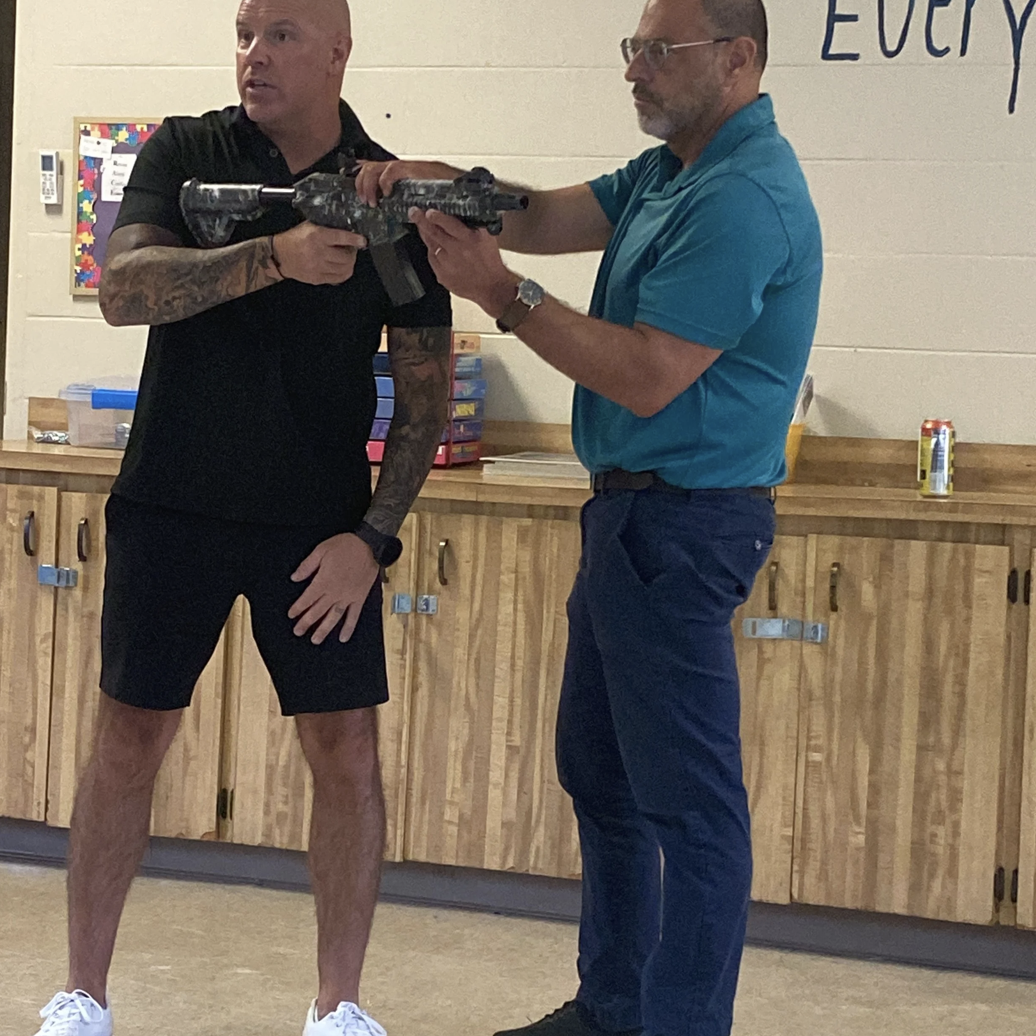
Before the Tortuga Music Festival one year, my cousin Brian—a former Marine and the founder of Weapon Brand—insisted that my friends and I get some basic safety training. I put a quick post on Facebook inviting people to come learn from him. Within 90 minutes, more than 30 people had said yes.
That gathering became the seed of Weapon Brand Florida. It wasn’t a glossy product launch. It was a group of people who were tired of feeling helpless and wanted real tools to keep themselves and the people they love safer.
That night Brian didn’t just talk about theory. He walked us through what actually happens to your brain and body when everything goes sideways, and what you need to have decided before the worst-case scenario. Because in a crisis, you don’t magically “rise to the occasion”—you fall to the level of your training.
If an active shooter event ever happens, here’s the plan
RUN
The moment your brain starts to wonder, “Was that a gunshot?” is the moment to move. Don’t wait for confirmation, don’t stop to grab your bag, and don’t waste time debating with yourself. If there is a path out, take it.
Put distance between you and the threat—much more than just outside the door. Bullets travel farther than most people realize. Avoid open spaces when you can, use walls, cars, and buildings as cover, and angle toward the edges of a crowd so you can break away.
If you’re knocked down, your first goal is to get back up. If you can’t, shield your head and lungs with your arms until you can move again. Survival starts with giving yourself another chance to stand.
HIDE
When you can’t safely run, your next option is to hide in a place where the attacker can’t reach you. Lock or barricade the door, turn off lights, and silence anything that makes noise—especially your phone.
There’s a difference between concealment and cover. Being out of sight isn’t enough. Choose spots that put solid material between you and the threat: metal, concrete, large furniture, or heavy filing cabinets. Think in layers between you and the door.
When you barricade, build wide across the doorway first so it can’t easily open, then stack items deeper into the room to create more protection. Simple tools like door wedges, rubber stops, or even a belt wrapped through a door closer can make a huge difference.
FIGHT
If running and hiding are no longer options and you are face-to-face with the attacker, fighting becomes the last line of defense. This is not about fighting fair. It’s about doing whatever it takes to survive.
At Weapon Brand, we say: “Fight Until the Last Breath… and It Won’t Be Mine.” You don’t need to be the strongest person in the room—you need to be fully committed to acting.
Focus on targets the body can’t ignore: the eyes, the throat, and the groin. Attacks to these areas disrupt vision, breathing, and balance. The goal is to break posture, create chaos in the attacker’s body, and open a window for you and others to escape.
Use whatever you can grab as a tool: a fire extinguisher, bottle, scissors, pen, belt, laptop, or backpack. A group of people acting together, with a plan, is far more powerful than people frozen in fear.
Everyday habits that quietly stack the odds in your favor
- Gunfire, especially indoors, echoes and can be hard to locate by sound alone. Don’t waste time trying to perfectly diagnose direction—focus on moving toward real exits and solid cover.
- Make a habit of spotting at least two exits whenever you walk into a room, restaurant, theater, or venue. Turn it into a game with your kids so it becomes automatic, not scary.
- In hallways, avoid hugging the walls where bullets can ricochet. Give yourself a little space out toward the center while you move.
- At home or in the office, upgrade door hardware. Swapping 1" screws for 3" screws in strike plates and hinges makes doors far harder to kick in.
- Mentally rehearse what you’d do in different spaces you frequent. As Brian says, “The body can’t go where the mind hasn’t already been.” A few minutes of visualization now can keep you from freezing later.
- Trust your instincts. If a place, person, or situation feels off, you don’t owe anyone an explanation for stepping away, leaving early, or saying no.
Years after those first messages about Borderline and Route 91, another alert came: an active shooter at Florida State University. Once again, we were checking in on friends and colleagues, refreshing news updates, and feeling that familiar mix of fear and anger.
That’s what trauma does—it echoes. It pulls old memories forward and reminds us why this work matters. For us at Weapon Brand, active shooter response, situational awareness, and crisis preparedness are not abstract topics. They’re tied to real people, real places, and real stories we carry with us.
I still remember dancing and singing at Borderline, feeling completely free in a place that later became a headline. My hope is that more people get to keep those kinds of memories—the joy, the music, the normal nights that stay normal.
And if the unthinkable ever happens again, I want them to have more than fear. I want them to have a plan, the skills to act, and the confidence to survive.