Tag: training

  • Finding the right firearm

    Finding the right firearm

    Weapon Wisdom • Firearms

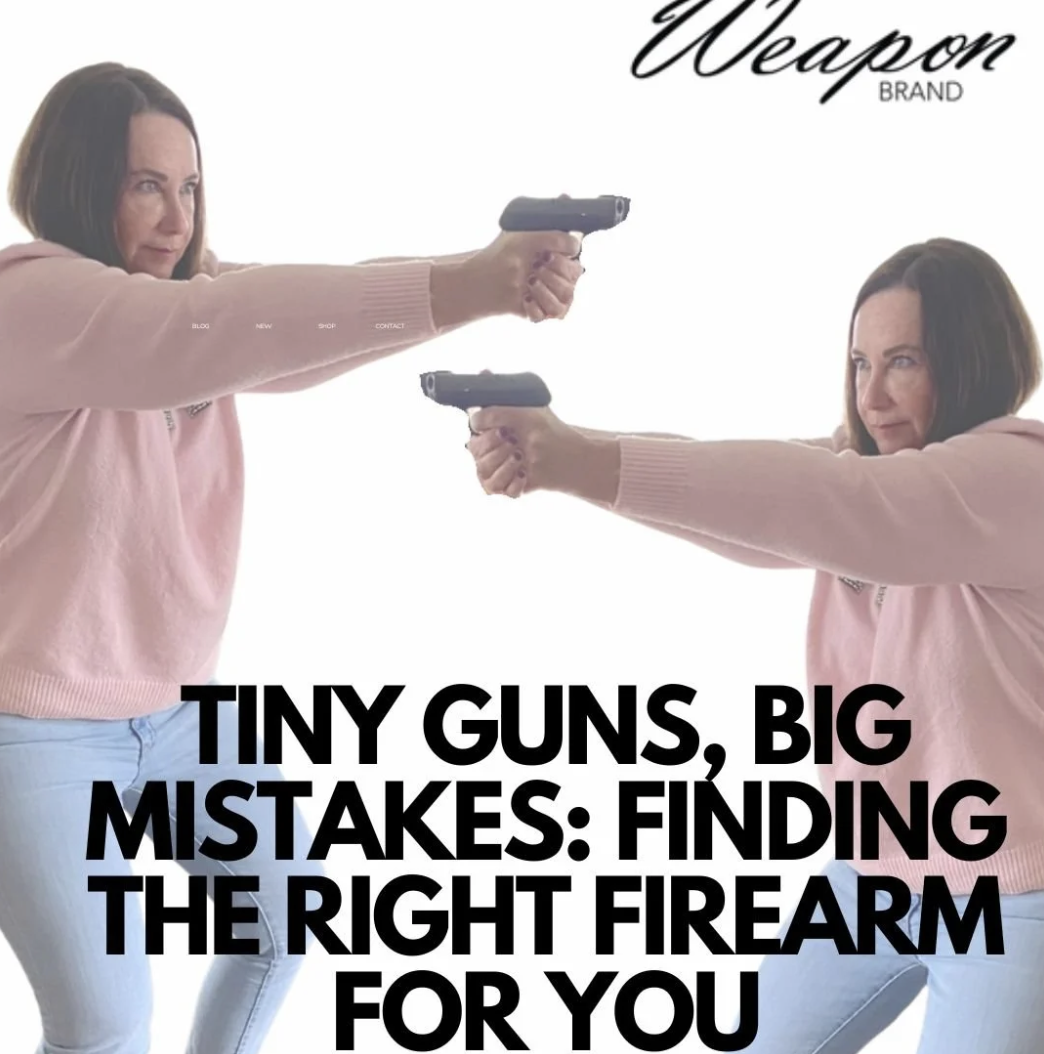
    Tiny Guns, Big Mistakes: Finding the Right Firearm for YOU

    By Jamie Anderson • Feb 14

    Let’s talk about one of the most common gun counter experiences women have: you walk in, and before you finish your sentence, someone is already reaching for the tiniest, cutest pistol in the case because it’s “perfect for a woman.”

    It looks like it belongs in a clutch next to your lipstick. It’s small, sparkly, and easy to hide — and that sales pitch can sound really convincing. But here’s the truth: when it comes to firearms, small doesn’t always mean easier or safer to shoot.

    Why “cute and tiny” can be harder to control

    Smaller guns usually mean less grip area, less weight, and less material to help manage recoil. All that force has to go somewhere — and it often goes straight into your hands and wrists.

    • They can feel “snappy” and unpleasant to shoot.
    • You may struggle to get a solid, consistent grip.
    • Follow-up shots are slower because you’re constantly fighting the recoil.

    If a gun is painful or intimidating to shoot, you’re less likely to train with it — and that’s the opposite of what we want for your safety.

    What actually matters when choosing your firearm

    Instead of starting with “How small can it be?”, start with:

    • Fit: Can you get a full, secure grip? Does it feel stable in your hand?
    • Control: Can you manage the recoil and get back on target quickly?
    • Confidence: Do you feel capable and in control when you press the trigger?
    • Training: Are you willing to practice with it regularly?

    The “right gun” is the one you can run well, not just the one that disappears easily into a purse or waistband.

    You don’t have to figure it out alone

    At Weapon Brand, we offer something most shops don’t: we’ll actually go to the gun store with you.

    Our instructors aren’t earning a commission or trying to move a specific model. We’re there to:

    • Help you compare different sizes and calibers.
    • Explain what to look for in a defensive firearm.
    • Make sure you’re not pressured into something that isn’t right for you.

    Think of us as your firearm-shopping best friend — the one who knows what all the specs actually mean and has zero interest in you buying a gun you’ll hate shooting.

    This Valentine’s Day, choose the right match

    Whether you’re celebrating with someone, flying solo, or happily in-between, your safety is non-negotiable. You deserve a firearm that fits you, supports your training, and helps you feel genuinely empowered — not just accessorized.

    You may or may not fall in love this February, but you can absolutely find a solid, reliable partner in steel — and learn how to handle it with skill and respect.

    Because when it comes to your safety, it’s not about the smallest, cutest option. It’s about the one that helps you get home.

    — Jamie Anderson

  • empowering safety

    empowering safety

    Weapon Wisdom • Active Shooter Response

    Empowering Safety: Navigating Crisis Through Self-Defense and Active Shooter Preparedness

    By Jamie Anderson • Apr 6

    In the moments after an attack, people are left asking the same questions: “What could we have done?” and “How do we keep this from happening again?” Those questions are exactly why we talk about active shooter preparedness before a crisis, not after.

    At Weapon Brand, we’ve seen firsthand how quickly a normal day can turn into chaos. From disrupted events to heartbreaking news stories, every incident reinforces the same truth: the time to learn how to respond is now.

    Refining “Run, Hide, Fight” for the real world

    You’ve probably heard the phrase “Run, Hide, Fight.” It’s a solid framework, but it needs to be understood in detail, practiced, and anchored in situational awareness to actually work under stress.

    Run: Move with intention, not panic

    If you hear shots or recognize a lethal threat, your first priority is distance and escape. That means:

    • Immediately scanning for multiple exit routes, not just the front door.
    • Using service corridors, side doors, and emergency exits if they get you out faster.
    • Avoiding elevators and choke points where crowds can get trapped.

    Hide: Make yourself hard to find and harder to reach

    When escape isn’t possible, you need a place that gives you time, protection, and options:

    • Choose rooms that lock and can be barricaded with heavy furniture.
    • Turn off lights, silence phones, and stay out of sightlines from doors and windows.
    • Whenever possible, get behind real cover (objects that can stop rounds), not just concealment.

    Fight: Commit fully if it’s your last option

    If you are directly confronted and cannot run or hide, you may have to fight for your life. This is never the first choice, but it must be a prepared choice:

    • Use improvised tools—extinguishers, chairs, bags, anything heavy or sharp.
    • Act with surprise, speed, and commitment, aiming for vulnerable areas.
    • Work as a team when possible to overwhelm and create a chance to escape.

    Firearms training: more than just pulling a trigger

    For those who choose to carry a firearm, skill and judgment are non-negotiable. It’s not enough to own a gun—you need to understand:

    • Legal responsibilities and use-of-force decisions.
    • Scenario-based decision making under pressure.
    • How to work around crowds, bystanders, and responding law enforcement.

    Our firearms and active shooter response courses focus on real-world context, not fantasy. We train students to think, move, and decide in a way that keeps more people alive.

    Prepared, not paranoid

    We never want people living in fear. The goal is prepared confidence: noticing exits when you walk into a building, listening to your instincts, and having a mental plan long before sirens and chaos enter the picture.

    The more often you think through “What would I do here?” in everyday spaces—schools, malls, workplaces, worship centers—the less likely you are to freeze if the unthinkable happens.

    Turning tragedy into action

    Every high-profile incident is a reminder that safety is a shared responsibility. Communities, schools, businesses, and families all play a role in preparation.

    Our commitment at Weapon Brand is simple: provide training that is honest, practical, and designed to be remembered under stress—so more people get home at the end of the day.

    — Jamie Anderson