Tag: writing

  • Realtor Safety

    Realtor Safety

    Weapon Wisdom • Realtor Safety

    Real Estate Professional’s Guide to Property Safety Vulnerabilities

    Oct 24  ·  Written by Jamie Anderson

    When I was in college in Akron, Ohio, I thought I’d found the perfect off-campus house. It looked like something out of a storybook: gingerbread trim, flower boxes, a front porch, and walking distance to both campus and my favorite sub shop, Blimpie’s (RIP to the warm turkey subs with Swiss on the softest bread).

    It even had a garage out back—gold in an Ohio winter. My car was a total clunker, but at least I wasn’t standing in the snow trying to jump it. It was everything a college student could want… until I realized my next-door neighbor was a drug dealer.

    Cars pulled into his driveway at all hours. People walked up, stayed a few minutes, and left. At the time, I didn’t fully process those patterns as red flags. Looking back now, I can see exactly what I was living next to—and how easily it could have gone bad.

    If I’d known more back then—or if my REALTOR® had been trained to spot those signs—we might have made different decisions. I could have driven the neighborhood at different times of day, watched who came and went, noticed whether kids were playing outside, or paid more attention to the overall feel of the area.

    That experience is one of the reasons I’m so passionate about this upcoming session: Real Estate Professional’s Guide to Property Safety Vulnerabilities, hosted by STAR (Suncoast Tampa Association of REALTORS®).

    This class helps REALTORS® become the most knowledgeable professionals in their market when it comes to identifying and communicating safety risks—in both homes and neighborhoods. It’s about giving clients more than a transaction. It’s about giving them confidence.

    The course is led by Brian Anderson-Needham, a U.S. Marine veteran, sniper, and former hostage negotiator who has trained over 50,000 officers nationwide. He’ll show you how to look at properties through the eyes of a safety professional and translate that into practical, client-friendly guidance.

    What you’ll learn

    • Spot vulnerabilities like a pro: According to FBI data, 79% of burglars enter through front doors, back doors, or first-floor windows. You’ll learn how to quickly identify weak points and recommend low-cost reinforcements that actually matter.
    • Evaluate neighborhoods, not just homes: What’s happening on the street before and after a showing? How’s the lighting, traffic, and general activity? You’ll practice reading the environment, not just the property.
    • Security upgrades that sell: Simple changes—3-inch strike plate screws, bar stops, motion-activated lights—can increase both safety and perceived value. You’ll know what to suggest and why.
    • Communicate confidently: We’ll cover how to talk about risk without sounding alarmist, so you stay professional while still protecting your clients.
    • The home defense mindset: Brian shares the five fundamentals of home defense—Evade, Barricade, Arm, Communicate, Respond— and how to translate them into practical advice for buyers and sellers.

    This isn’t about selling fear. It’s about selling peace of mind. When your clients see that you’re thinking about their real-world safety—not just square footage and finishes—they see you as more than their REALTOR®. They see you as someone they can truly trust.

    Class details

    Date: November 4, 2025
    Time: 2:00 – 3:30 PM (Zoom)
    Hosted by: STAR – Suncoast Tampa Association of REALTORS®
    Investment: $5

    Registration link:
    calendar.tamparealtors.org/events/9797534

    If you’re ready to be the person your clients rely on not just for deals, but for smarter, safer decisions, this class is for you.
    Written by Jamie Anderson

  • De-escalation

    De-escalation

    Weapon Wisdom • De-escalation & Workplace Safety

    HR Tampa, Bill, and Why We Train

    Oct 3  ·  Written by Jamie Anderson

    I walked into the HR Tampa Conference feeling the temperature of the world on everyone’s shoulders. Headlines. Tension. People a little quicker to snap. Then Brian took the mic for Mastering the Art of De-Escalation & Conflict Avoidance, and you could feel the room exhale. Not because the topic was soft—but because it was useful. We didn’t talk theory; we walked through the messy, human moments: the employee who won’t back down, the customer who’s already heated, the meeting that’s sliding off the rails.

    Afterward, folks lined up with real stories. “Here’s what happened last week—what would you do?” We stayed late, mapping language choices, distance, posture, exits, and follow-ups. It reminded me why we teach this: when people know what to do, they feel safer—and when they feel safer, they perform better. That’s not fluff; that’s operational reality.

    We’re hosting a follow-up Q&A on October 8, 2025 via Zoom. If you want the link or a calendar invite, drop us an email at info@weaponbrand.com . Bring your sticky situations. We’ll work them.

    That evening, we lost someone who lived our philosophy louder than most. Bill Cummins, Brian’s stepdad, finished a five-year fight with cancer at 54. Bill wore his Weapon Brand T-shirt to chemo, to errands, to everywhere—because “Be Your OWN Weapon” wasn’t a slogan to him. It was a mindset: whatever you’re up against—a predator, a bully, illness, stress—you build skills, choose your stance, and take the next right step.

    When Bill passed, we did the only thing that makes sense after a loss like that: we checked on Brian’s mom. We lifted where we could. And we recommitted to teaching the skills that make hard days survivable— at home and at work.

    That’s the bridge between HR Tampa and Bill.

    De-escalation isn’t about being passive; it’s about being prepared. In chemo rooms and conference rooms, the same principles keep people safe: awareness, language, boundaries, and practiced responses. Your team doesn’t need a perfect script—they need muscle memory. You can’t go where your mind has never been, so we take people there first: in training, not in crisis.

    What this looks like inside a company

    • De-escalation training for employees and leaders: calm communication, boundary setting, and conflict resolution that cuts incidents before they spike.
    • Workplace violence prevention & response: early-warning cues, safe positioning, exit options, and post-incident protocols that protect people and reduce liability.
    • Corporate safety & wellness programs: threat awareness, psychological safety, self-defense (to keep them safe on and off the clock), and short, repeatable drills that build confidence and reduce burnout.
    • Manager playbooks + role-plays: real scenarios, the actual words, and reps until it sticks.

    The results are practical: fewer workers’ comp claims, fewer terminations, fewer HR fires, better retention, more focus. When people feel safe, they do better work. It’s that simple.

    So yes—the world feels loud right now. But there’s no better moment to give your people tools that travel with them—tools they can use at the register, on the jobsite, in the boardroom, and at home with the people they love.

    We’re dedicating this season of training to Bill. He showed us what it means to fight with clarity and heart. We’ll keep showing up for our clients the same way—and for Brian’s mom, too—because community is part of safety, and if you’re reading this, we welcome YOU to the Weapon Brand community.

    If you want help, we’re here. Onsite or virtual. Short workshops or full programs. Follow-up Q&A, too. Next step: ask for the October 8 Zoom link, or book a discovery call . And wherever you are, remember: ALWAYS Be Your OWN Weapon.

    Written by Jamie Anderson

  • Active Shooter Safety

    Active Shooter Safety

    Weapon Wisdom • Active Shooter & Safety

    The Texts I’ll Never Forget (and the Work That Followed)

    Sep 1 • Written by Jamie Anderson

    In 2018, my phone buzzed in the middle of the night with a message from a friend: there was a shooting at Borderline Bar & Grill in Thousand Oaks, CA—a place I knew well, owned by a longtime friend and client. Thirteen people were killed. Lives, families, and an entire community were changed in an instant.

    It wasn’t the first time that kind of message had lit up my phone. The year before, the same friend texted that his brother-in-law was at the Route 91 Harvest Festival in Las Vegas—while it was under attack. I remember the sick feeling of refreshing the news, checking in on friends, and waiting for “I’m okay” texts that sometimes took hours or days to arrive. The trauma from that night still shows up as anxiety, survivor’s guilt, and nervous system overload for so many people who were there.

    So when people ask why we do what we do at Weapon Brand, my answer is simple: this isn’t about a brand or a business strategy. It’s personal.

    Before the Tortuga Music Festival one year, my cousin Brian—a former Marine and the founder of Weapon Brand—insisted that my friends and I get some basic safety training. I put a quick post on Facebook inviting people to come learn from him. Within 90 minutes, more than 30 people had said yes.

    That gathering became the seed of Weapon Brand Florida. It wasn’t a glossy product launch. It was a group of people who were tired of feeling helpless and wanted real tools to keep themselves and the people they love safer.

    That night Brian didn’t just talk about theory. He walked us through what actually happens to your brain and body when everything goes sideways, and what you need to have decided before the worst-case scenario. Because in a crisis, you don’t magically “rise to the occasion”—you fall to the level of your training.

    If an active shooter event ever happens, here’s the plan

    RUN

    The moment your brain starts to wonder, “Was that a gunshot?” is the moment to move. Don’t wait for confirmation, don’t stop to grab your bag, and don’t waste time debating with yourself. If there is a path out, take it.

    Put distance between you and the threat—much more than just outside the door. Bullets travel farther than most people realize. Avoid open spaces when you can, use walls, cars, and buildings as cover, and angle toward the edges of a crowd so you can break away.

    If you’re knocked down, your first goal is to get back up. If you can’t, shield your head and lungs with your arms until you can move again. Survival starts with giving yourself another chance to stand.

    HIDE

    When you can’t safely run, your next option is to hide in a place where the attacker can’t reach you. Lock or barricade the door, turn off lights, and silence anything that makes noise—especially your phone.

    There’s a difference between concealment and cover. Being out of sight isn’t enough. Choose spots that put solid material between you and the threat: metal, concrete, large furniture, or heavy filing cabinets. Think in layers between you and the door.

    When you barricade, build wide across the doorway first so it can’t easily open, then stack items deeper into the room to create more protection. Simple tools like door wedges, rubber stops, or even a belt wrapped through a door closer can make a huge difference.

    FIGHT

    If running and hiding are no longer options and you are face-to-face with the attacker, fighting becomes the last line of defense. This is not about fighting fair. It’s about doing whatever it takes to survive.

    At Weapon Brand, we say: “Fight Until the Last Breath… and It Won’t Be Mine.” You don’t need to be the strongest person in the room—you need to be fully committed to acting.

    Focus on targets the body can’t ignore: the eyes, the throat, and the groin. Attacks to these areas disrupt vision, breathing, and balance. The goal is to break posture, create chaos in the attacker’s body, and open a window for you and others to escape.

    Use whatever you can grab as a tool: a fire extinguisher, bottle, scissors, pen, belt, laptop, or backpack. A group of people acting together, with a plan, is far more powerful than people frozen in fear.

    Everyday habits that quietly stack the odds in your favor

    • Gunfire, especially indoors, echoes and can be hard to locate by sound alone. Don’t waste time trying to perfectly diagnose direction—focus on moving toward real exits and solid cover.
    • Make a habit of spotting at least two exits whenever you walk into a room, restaurant, theater, or venue. Turn it into a game with your kids so it becomes automatic, not scary.
    • In hallways, avoid hugging the walls where bullets can ricochet. Give yourself a little space out toward the center while you move.
    • At home or in the office, upgrade door hardware. Swapping 1" screws for 3" screws in strike plates and hinges makes doors far harder to kick in.
    • Mentally rehearse what you’d do in different spaces you frequent. As Brian says, “The body can’t go where the mind hasn’t already been.” A few minutes of visualization now can keep you from freezing later.
    • Trust your instincts. If a place, person, or situation feels off, you don’t owe anyone an explanation for stepping away, leaving early, or saying no.

    Years after those first messages about Borderline and Route 91, another alert came: an active shooter at Florida State University. Once again, we were checking in on friends and colleagues, refreshing news updates, and feeling that familiar mix of fear and anger.

    That’s what trauma does—it echoes. It pulls old memories forward and reminds us why this work matters. For us at Weapon Brand, active shooter response, situational awareness, and crisis preparedness are not abstract topics. They’re tied to real people, real places, and real stories we carry with us.

    I still remember dancing and singing at Borderline, feeling completely free in a place that later became a headline. My hope is that more people get to keep those kinds of memories—the joy, the music, the normal nights that stay normal.

    And if the unthinkable ever happens again, I want them to have more than fear. I want them to have a plan, the skills to act, and the confidence to survive.

    Written by Jamie Anderson

  • Personal Safety

    Personal Safety

    Weapon Wisdom • Personal Safety

    When Your Job Makes You a Target: What a Photographer’s Story and Mine Can Teach You About Personal Safety

    Aug 1  ·  Written by Jamie Anderson

    There’s a video I always come back to. It follows a photographer walking alone back to his car after a shoot when masked men suddenly close in on him. They don’t chat. They don’t posture. They move with intention toward one goal: taking his gear.

    What they don’t know is that he’s armed. He never fires a shot, but simply revealing his firearm and having the training to handle it safely is enough to send them running. That single moment very likely kept him alive.

    The clip is a reenactment based on a real incident, but the threat it illustrates is happening more and more often in the real world.

    You can watch the reenactment here:  Watch the video

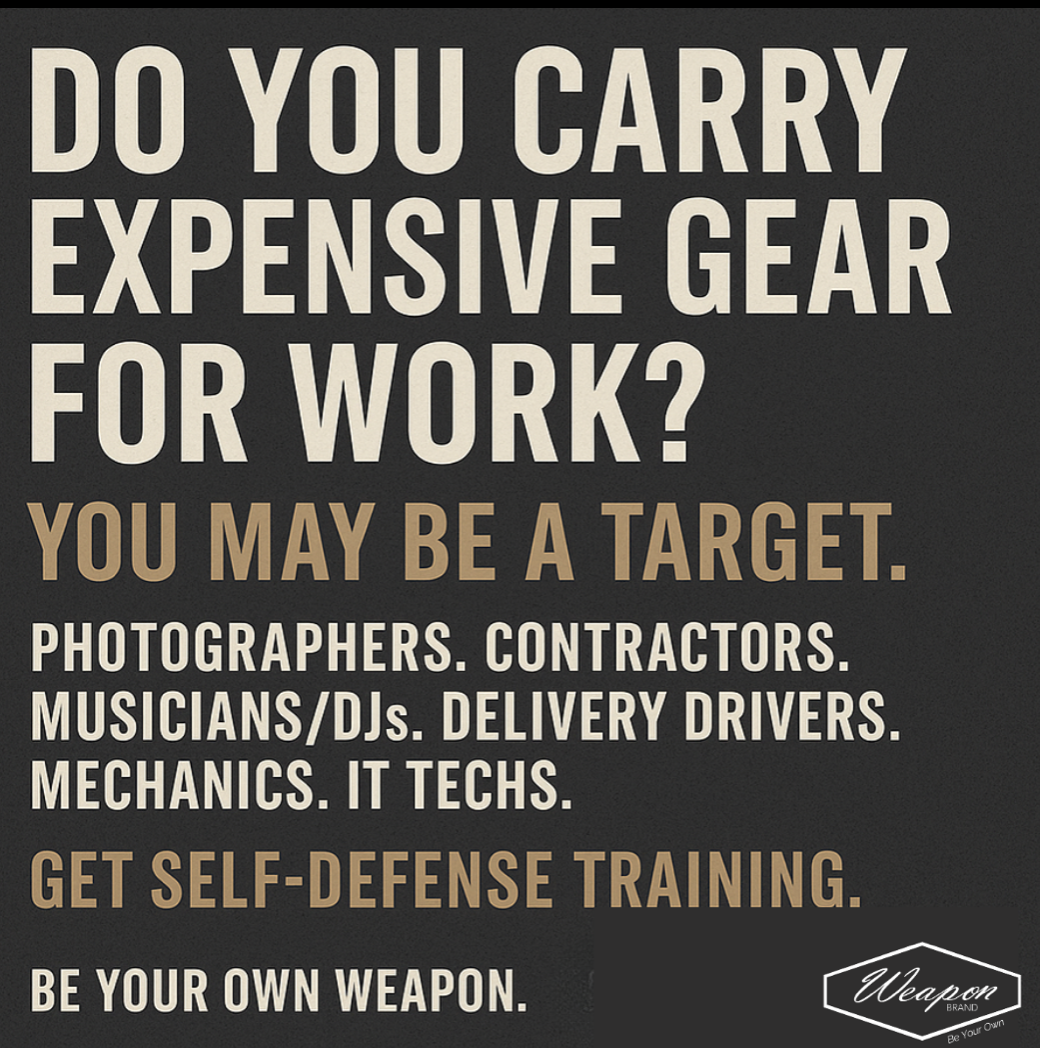
    You don’t need expensive gear to be seen as a target

    In that story, the camera equipment is what catches the attackers’ attention. But here’s what I want people to understand: sometimes it isn’t gear that makes someone vulnerable. Sometimes it’s simply the fact that you’re alone, focused on your work, and in the wrong place at the wrong time.

    Long before Weapon Brand existed, I worked in the mortgage world. No cameras, no expensive tools, no obvious valuables. I was just doing my job, trying to help a client refinance a home—and I was physically attacked.

    There was no warning and nothing obvious to steal. I was simply an easy opportunity. That moment flipped a switch in me. It’s one of the reasons I’m so relentless now about personal safety, boundaries, and real-world training.

    Whether it’s your equipment or just your presence, the wrong person can see you as a chance to get what they want.

    Who really needs to hear this

    We train a lot of people who never thought they’d be at risk until something happened that they couldn’t ignore. Many of them work alone, travel for work, or move in and out of unfamiliar spaces every day.

    This includes people like:

    • Photographers and videographers
    • Contractors, tradespeople, and in-home service providers
    • IT professionals and mobile technicians
    • Delivery and courier drivers
    • Medical staff transporting meds, supplies, or equipment
    • Sales reps traveling with product samples, tech, or demos

    Sometimes, the valuable gear is what draws attention. Sometimes it’s the pattern of you arriving and leaving alone. And sometimes, it’s just that someone decides you are the easiest option in that moment.

    What we focus on at Weapon Brand

    Our training isn’t just about the moment everything goes wrong. It starts much earlier—with how you think, what you notice, and how you set yourself up to be a harder target in the first place.

    In our classes, we cover skills like:

    • Recognizing common pre-attack behaviors and cues that predators share, no matter the setting
    • Building practical situational awareness so you’re less likely to be surprised or cornered
    • Understanding key vulnerable zones on the body and how to use simple, high-leverage strikes if physical defense is your only option
    • For those who legally carry firearms, how and when to draw in a way that’s both responsible and defensible

    Tools matter, but they’re not the whole story. Your awareness, decision-making, and training are what turn you into your own first line of defense.

    If you send people into the field, their safety is your responsibility

    If you run a business where employees drive to sites, carry equipment, enter homes or job sites, or work alone in public spaces, this isn’t just a “nice to have” topic. It’s a duty of care issue.

    We design private, scenario-based trainings around the real risks your team faces. That might mean walking through how to approach a dark parking lot, how to manage an uneasy client in their home, or how to handle that moment when a stranger closes distance a little too quickly.

    Replacing lost gear is frustrating and expensive—but it’s possible. Replacing a person is not.

    I didn’t have access to this kind of training when I needed it most. That’s why I’m so committed to making sure individuals and teams have options, strategies, and skills long before they ever need them.

    If you’d like to explore training for yourself or your team, you can start here:  WeaponBrand.com

    — Jamie Anderson

  • Field Notes

    Field Notes

    Weapon Wisdom • Field Notes

    A day in the life of a National Guard Servicemember… From a civilian’s point of view.

    Apr 28  ·  Written by Jamie Anderson

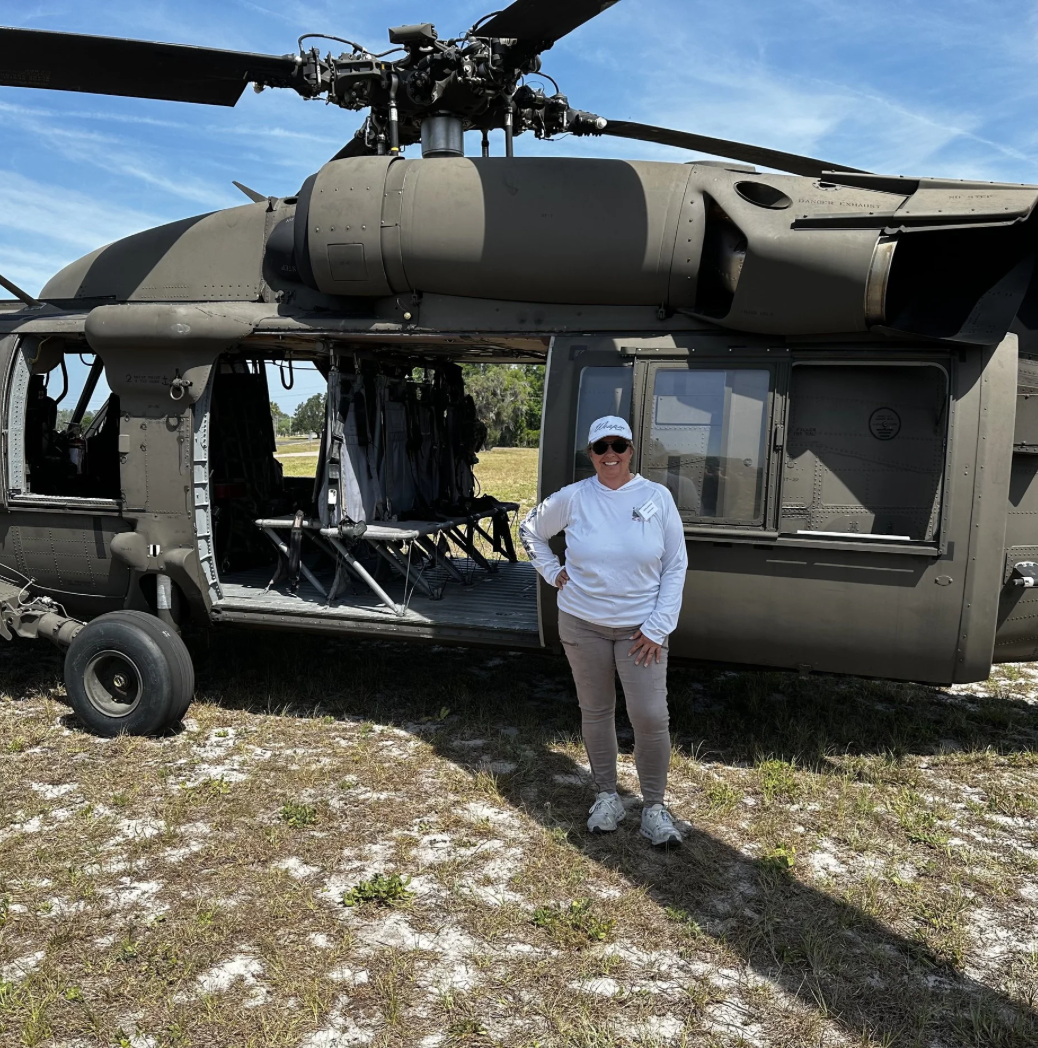
    As CEO of Weapon Brand, I was invited to step into the world of the Florida National Guard through a program called Bosslift, hosted by Employer Support of the Guard and Reserve (ESGR). The goal was simple but powerful: give employers an honest look at what their Guard team members actually do to support both state and federal missions.

    The day started with a roughly ninety-minute ride in a Black Hawk helicopter up to Camp Blanding — an instant bucket-list moment. On board and on the ground, I met other employers from across Florida who also have Guard members on their teams: local governments, healthcare systems, tech companies, logistics firms, and more. It was a reminder that Guard servicemembers are woven into almost every industry you can think of.

    Once we landed, the Guard walked us through the missions they support: helping staff and secure state prisons, assisting federal partners, and standing behind large-scale events like the Super Bowl. The message was clear: when you hire a National Guard servicemember, you’re bringing in someone who is trained to problem-solve, adapt quickly, and finish the job under pressure.

    We also spent time with chemical and biological warfare specialists, seeing how they prepare for threats most civilians never think about. From there, we moved into weapons simulations using M4 platforms — and that’s where the day stopped feeling like a “tour” and turned into a gut-check.

    I run a company that lives and breathes self-defense and firearm safety, but I’m not one of our trainers. My job is to make sure our instructors, programs, and partners are aligned so the right people get the right training. I’m comfortable defending myself, but firearms under stress are a different world.

    In our group, there was a guy who came in full of confidence, bragging that he would qualify with no problem. Spoiler: he didn’t. None of us in that group did. Not even the firefighters. I wasn’t wearing my glasses and could barely see the targets. Now picture waking up out of a dead sleep to a threat in the dark and expecting to hit exactly what you intend to under that kind of fear and adrenaline.

    That experience drove home a truth we talk about constantly at Weapon Brand: owning a gun doesn’t make you trained. Going to the range a few times a year doesn’t make you trained. Even getting a concealed carry permit doesn’t make you trained. Real readiness comes from consistent, high-pressure training that pushes your nervous system, your decision-making, and your ability to act when everything in you wants to freeze.

    After the simulations, we watched a Patriot Award ceremony honoring a supportive employer and an incredible Physician Assistant whose dedication to service really stuck with me. We also signed a Statement of Support for the Guard and Reserve — a small gesture compared to what they give, but one that matters.

    The day wrapped with another flight back — doors open on the Black Hawk for part of it. The heat, the metal seats, the gear, the noise — and that was just a small taste of what these servicemembers deal with as part of their normal routine. Driving home hot, tired, and grateful, I kept thinking about how lucky we are to have people willing to put everything on the line.

    For me, the faces behind that gratitude are personal: my dad, my boyfriend, my business partner and Weapon Brand founder Brian Anderson-Needham, and our instructors Dylan Brieck and Gabrielle LePore. They’re just a few of the men and women whose service and sacrifice make days like this possible.

    And if you’re still reading, you’re my kind of people. At Weapon Brand, we don’t just teach “cool moves” or check a box for compliance. We prepare people for the moments they hope never happen: Active Shooter and Aggressor Response, conflict management and de-escalation, personal safety and threat awareness, and mindset work like our “Creating a Weapon Mindset” programs. Being tough doesn’t start with a punch; it starts with how you think, plan, and train long before anything goes wrong.

    I share this because I want more employers and community leaders to see what I saw that day: National Guard servicemembers are not just employees who occasionally get called away. They are disciplined, mission-ready professionals who bring that same mindset back to your teams, your customers, and your community.

    For more photos and behind-the-scenes video from this day, you can check out our Facebook page .

    — Jamie Anderson

  • Active Shooter Response

    Active Shooter Response

    Weapon Wisdom • Active Shooter Response

    The Texts I’ll Never Forget (and the Work That Followed)

    By Jamie Anderson

    In 2018, I woke up to a message from a friend: “Shooting at Borderline.” Half-asleep, I assumed they were filming something at the bar and texted back something casual. The next reply hit like a punch: “No. There’s a shooting at Borderline. Active shooter.”

    Borderline Bar & Grill in Thousand Oaks, CA wasn’t just a place on the news. It was owned by a longtime friend and client. It had been part of our community since the 1980s. Thirteen lives were taken that night. The business never reopened in that iconic location. For the people who loved it, nothing was ever the same.

    The year before, in 2017, another message from the same friend shook me. I had decided—very out of character—not to go to the Route 91 Harvest Festival in Las Vegas. That night I got a text: “My brother-in-law is at the festival. They’re under attack.”

    I sat there trying to track who was there, who had made it out, who was still unaccounted for. We were glued to the TV, refreshing our phones, waiting for “I’m okay” messages. Some came quickly. Others took days. The aftershocks are still there—PTSD, survivor’s guilt, anxiety that doesn’t fully disappear.

    So when people ask why we do what we do at Weapon Brand, my answer is simple: it’s not just a business model. It’s deeply personal.

    A living room safety talk that changed everything

    When I planned to attend the Tortuga Music Festival, my cousin Brian—founder of Weapon Brand and a former Marine—insisted my friends and I get some basic safety training first. How to move with a crowd. What to do if something goes wrong. How to increase your chances of surviving the unthinkable.

    I posted on Facebook: “Anyone want to come hear my cousin Brian talk about safety?” I figured a handful of people might show up. Within 90 minutes, over 30 people said yes. That spontaneous living room session became the unofficial beginning of Weapon Brand Florida—not as a launch party, but as a shared response to fear, grief, and “never again.”

    When the news hits close to home — again

    Years later, another headline cut through our feeds: an active shooter at Florida State University. Two people killed. Others in the hospital. Once again, we were checking on friends whose kids attend FSU, reaching out to colleagues who work on campus, and watching the coverage with that familiar knot in our stomachs.

    That’s what trauma does. It echoes. A new event drags older memories to the surface. The fear, the heartbreak, the feeling of powerlessness—all of it comes roaring back, along with the urgency to help people be better prepared.

    Active shooter response that’s grounded in real life

    At Weapon Brand, we teach active shooter response, situational awareness, and crisis preparedness. We talk about movement, cover, communication, and decision-making under stress. We help teams build plans that are realistic and usable instead of theoretical and forgotten.

    But for us, these aren’t abstract concepts or slides in a deck. They’re tied to real people, real venues, and real nights that changed lives. When we train a team, we’re thinking about the friends we’ve checked on, the families we know, and the places we ’ve danced, laughed, and made memories.

    One of my last memories at Borderline is singing along at a LOCASH concert—crowd shoulder-to-shoulder, everyone relaxed and happy. That’s what I want people to keep experiencing: joy, freedom, and normal life.

    We can’t erase violence from the world. But we can give people tools that make them harder to harm and more likely to survive. If tragedy ever shows up again at a bar, festival, campus, or workplace, I want the people in that crowd to have more than fear to work with.

    I want them to know what to do. I want them to get home.

    — Jamie Anderson

  • College Self Defense

    College Self Defense

    Weapon Wisdom • College Safety

    College Self-Defense: Giving Students More Than Just a Whistle

    By Jamie Anderson

    College is supposed to be a season of independence, discovery, and growth — not fear. But the reality is that many students, especially women, learn to manage their safety by shrinking their world: staying in, avoiding certain places, and hoping nothing bad happens.

    True safety doesn’t come from fear. It comes from skills, awareness, and clear boundaries that let students fully participate in campus life while still protecting themselves and each other.

    Awareness, not anxiety

    A lot of campus safety messaging accidentally teaches students to be afraid of everything. Effective self-defense training does the opposite: it teaches them how to notice what matters and filter out what doesn’t.

    • Understanding pre-incident indicators and grooming behavior
    • Spotting isolating tactics at parties, bars, or study groups
    • Trusting gut instincts instead of rationalizing red flags away

    The goal is not to create paranoia, but to give students a clearer “radar” so they can enjoy life with eyes open.

    Boundaries, consent, and the power of “no”

    Physical self-defense starts long before someone grabs you. It starts with verbal boundaries, body language, and the confidence to say “no” without apologizing for it.

    • How to say “no” clearly and firmly
    • How to leave a situation early, even if it feels “awkward”
    • How to support friends when their boundaries are being pushed

    When students know it’s okay to draw a line, they’re less likely to stay in situations that don’t feel right “just to be polite.”

    Simple skills that actually hold up under stress

    Real self-defense for college students isn’t about memorizing 30 complicated moves. It’s about a handful of techniques that are:

    • Easy to learn and remember
    • Effective from common positions (standing, pinned, grabbed)
    • Built on gross motor skills, not fancy choreography

    When training is done right, students walk away knowing how to break grips, create distance, use their voice, and get to safety — even if adrenaline is high.

    Safety is a team sport

    One of the most powerful parts of college self-defense training is what it does for the community. We don’t just teach students how to protect themselves — we show them how to look out for each other.

    • How to safely interrupt suspicious or uncomfortable situations
    • How to support someone who discloses an incident
    • How to communicate clearly with campus security or law enforcement

    When everyone sees safety as a shared responsibility, the entire campus becomes a harder place for predators to operate.

    Prepared, not perfect

    No training can guarantee that nothing bad will ever happen. But good self-defense and situational awareness training can give students options, confidence, and a plan — instead of fear and helplessness.

    College should be a place where young adults learn who they are, explore the world, and build a future they’re excited about. Giving them real tools to stay safe is one of the most practical ways we can support that.

    — Jamie Anderson

  • empowering safety

    empowering safety

    Weapon Wisdom • Active Shooter Response

    Empowering Safety: Navigating Crisis Through Self-Defense and Active Shooter Preparedness

    By Jamie Anderson • Apr 6

    In the moments after an attack, people are left asking the same questions: “What could we have done?” and “How do we keep this from happening again?” Those questions are exactly why we talk about active shooter preparedness before a crisis, not after.

    At Weapon Brand, we’ve seen firsthand how quickly a normal day can turn into chaos. From disrupted events to heartbreaking news stories, every incident reinforces the same truth: the time to learn how to respond is now.

    Refining “Run, Hide, Fight” for the real world

    You’ve probably heard the phrase “Run, Hide, Fight.” It’s a solid framework, but it needs to be understood in detail, practiced, and anchored in situational awareness to actually work under stress.

    Run: Move with intention, not panic

    If you hear shots or recognize a lethal threat, your first priority is distance and escape. That means:

    • Immediately scanning for multiple exit routes, not just the front door.
    • Using service corridors, side doors, and emergency exits if they get you out faster.
    • Avoiding elevators and choke points where crowds can get trapped.

    Hide: Make yourself hard to find and harder to reach

    When escape isn’t possible, you need a place that gives you time, protection, and options:

    • Choose rooms that lock and can be barricaded with heavy furniture.
    • Turn off lights, silence phones, and stay out of sightlines from doors and windows.
    • Whenever possible, get behind real cover (objects that can stop rounds), not just concealment.

    Fight: Commit fully if it’s your last option

    If you are directly confronted and cannot run or hide, you may have to fight for your life. This is never the first choice, but it must be a prepared choice:

    • Use improvised tools—extinguishers, chairs, bags, anything heavy or sharp.
    • Act with surprise, speed, and commitment, aiming for vulnerable areas.
    • Work as a team when possible to overwhelm and create a chance to escape.

    Firearms training: more than just pulling a trigger

    For those who choose to carry a firearm, skill and judgment are non-negotiable. It’s not enough to own a gun—you need to understand:

    • Legal responsibilities and use-of-force decisions.
    • Scenario-based decision making under pressure.
    • How to work around crowds, bystanders, and responding law enforcement.

    Our firearms and active shooter response courses focus on real-world context, not fantasy. We train students to think, move, and decide in a way that keeps more people alive.

    Prepared, not paranoid

    We never want people living in fear. The goal is prepared confidence: noticing exits when you walk into a building, listening to your instincts, and having a mental plan long before sirens and chaos enter the picture.

    The more often you think through “What would I do here?” in everyday spaces—schools, malls, workplaces, worship centers—the less likely you are to freeze if the unthinkable happens.

    Turning tragedy into action

    Every high-profile incident is a reminder that safety is a shared responsibility. Communities, schools, businesses, and families all play a role in preparation.

    Our commitment at Weapon Brand is simple: provide training that is honest, practical, and designed to be remembered under stress—so more people get home at the end of the day.

    — Jamie Anderson

  • Home Security

    Home Security

    Weapon Wisdom • Home Security

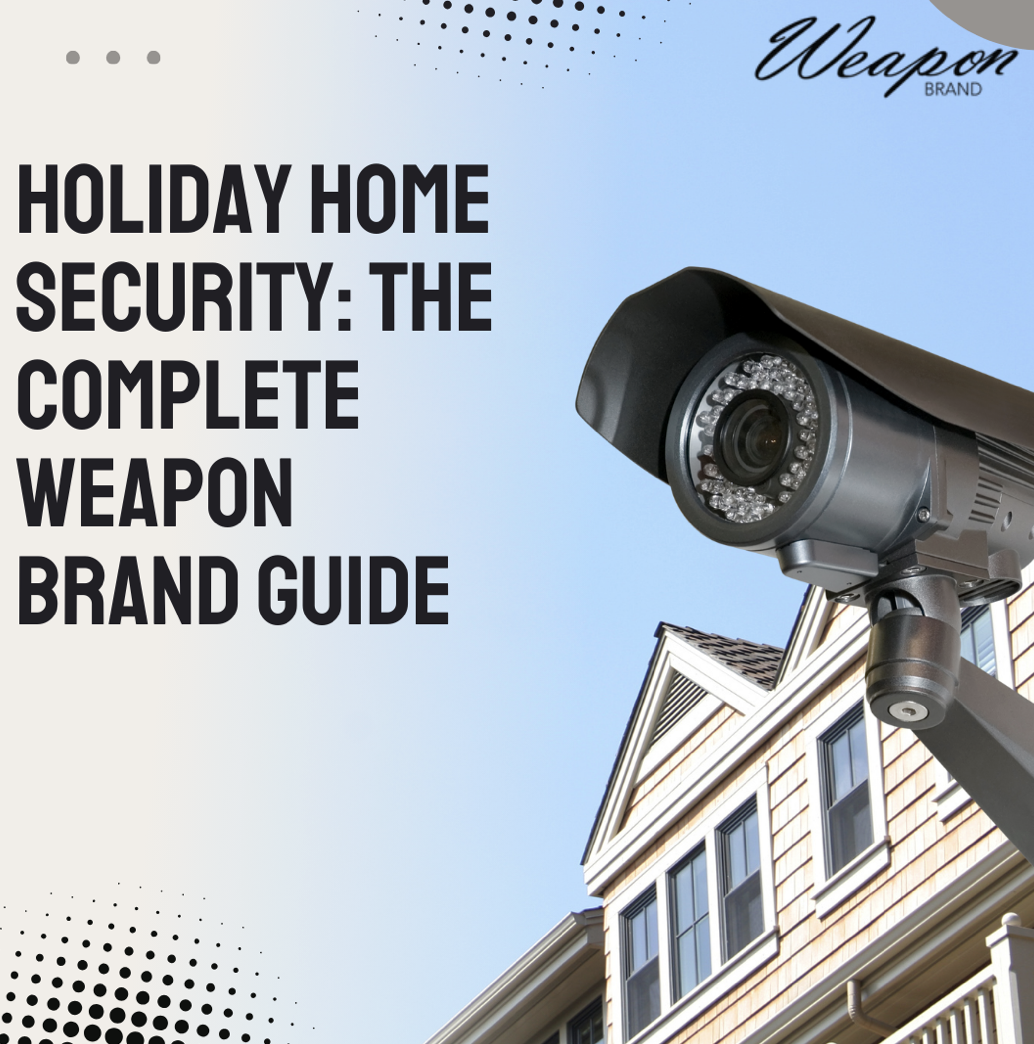
    Holiday Home Security: The Complete Weapon Brand Guide

    By Jamie Anderson • Nov 22

    The holidays should feel like a time to relax, not worry about who’s watching your home. Whether you’re traveling or just out more than usual, a few simple upgrades can make your house a much harder target.

    Below are fourteen practical ways to reduce your risk of a break-in, protect the people you love, and create real peace of mind this season.

    1. Use a security system or at least visible signage.
      A monitored alarm is ideal, but even a yard sign or window sticker tells a potential intruder your home won’t be an easy in-and-out.
    2. Leverage the “dog effect.”
      A barking dog—real or clearly suggested—can be enough to push someone toward an easier, quieter target.
    3. Keep your place looking lived-in.
      Don’t let mail, packages, or newspapers pile up. Ask a neighbor or friend to bring things in and park in your driveway while you’re away.
    4. Trim back hiding spots.
      Overgrown shrubs, trees, and dense landscaping around doors and windows give cover to anyone trying to work on a lock or pry a window.
    5. Reinforce doors and windows.
      Upgrade weak locks, consider door reinforcement plates, and use window locks or security film so glass is harder to breach quickly.
    6. Add smart lighting outside.
      Motion-activated or scheduled lights at entry points and dark corners make it harder for someone to move around without being seen.
    7. Use cameras for awareness and deterrence.
      Visible cameras—or camera doorbells—extend your eyes and ears. You gain alerts, recordings, and a reason for intruders to think twice.
    8. Consider location-based risk.
      Homes that are more isolated or sit on corners, alleys, or busy cut-throughs may need extra layers: lighting, cameras, and stronger physical security.
    9. Create the illusion that someone’s home.
      Timers for lamps, visible TVs, music, and open/closed blinds patterns can all help sell the idea that people are inside—even when you’re not.
    10. Know your escape routes.
      Walk your home and identify every way out: doors, windows, secondary exits. Talk through where you’d go and how you’d get there in an emergency.
    11. Train close-quarters self-defense.
      If someone does make it inside, skills from programs like our close-quarters and home-defense training can help you respond under pressure.
    12. Get proper firearm instruction if you own a gun.
      A firearm in the home is a serious responsibility. Seek professional training so you understand safe storage, handling, and when not to use it.
    13. Build a tactical mindset, not just a gear collection.
      Learn to quickly assess situations, prioritize threats, and use positioning and distance to reduce an attacker’s advantage.
    14. Review your security regularly.
      Set a reminder a few times a year to test alarms, replace batteries, walk the perimeter, and update any weak points you notice.

    None of these steps require fear or paranoia—they’re simply proactive habits. The more layers you stack, the less attractive your home becomes to someone looking for an easy score.

    This holiday season, combine practical upgrades with a prepared mindset. Pay attention to patterns around your home, talk through plans with the people you live with, and keep learning. Your safety starts long before a threat appears at the door.

    — Jamie Anderson